آموزش ساخت حلگرهای شبیهسازی سیالات برای VFX و Houdini
CGCircuit – Building Fluid Solvers for VFX and Houdini – Part 1&2

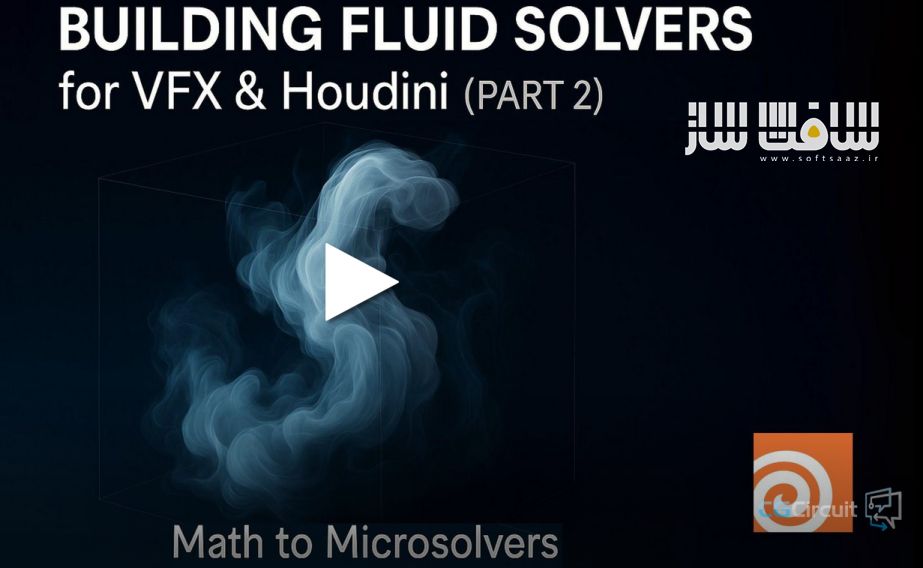
آموزش ساخت حلگرهای شبیهسازی سیالات برای VFX و Houdini
آموزش ساخت حلگرهای شبیهسازی سیالات برای VFX و Houdini : اگر همیشه رؤیای ساخت موتور شبیهسازی سیالات خودتان – مشابه Houdini یا RealFlow – را در سر داشتید، این مجموعه آموزشی دقیقاً برای شماست.
در قسمت اول از این مجموعه، وارد دنیای برنامهنویسی شبیهسازیها میشوید. آموزش با مبانی ریاضی لازم برای درک نحوهی عملکرد حلگرهای سیالات آغاز میشود: از حساب دیفرانسیل و انتگرال تا جبر خطی و مشتقات جزئی. اما نگران نباشید—این دوره بههیچوجه خشک و تئوریک نیست؛ بلکه به زبانی ساده و کاربردی طراحی شده تا حتی اگر تنها آشنایی مختصری با ریاضیات دبیرستانی دارید، بتوانید مفاهیم پشت شبیهسازی دود، آتش و آب را درک کنید.
در پایان بخش اول، با زبان ریاضی مورد استفادهی متخصصان شبیهسازی آشنا خواهید شد و آمادهاید تا وارد قسمت دوم شوید، جایی که ساخت حلگر را با شبهکد (Pseudocode) و میکروسالورها در Houdini آغاز میکنید. در این بخش یاد میگیرید که چگونه مفاهیم ریاضی پایه را به ابزارهای واقعی در دنیای شبیهسازی تبدیل کنید.
در این بخش دوم وارد دنیای واقعی سیالات میشوید و میآموزید چگونه مفاهیم ریاضی بخش اول را در قالب حلگرهای کاربردی پیادهسازی کنید. هدف این دوره ساخت موتور تجاری نیست، بلکه تمرکز بر درک منطق پشت شبیهسازیها و ایجاد پایهای قوی برای توسعهی ابزارهای شخصی است.
در این بخش، با استفاده از شبهکد و مثالهای واقعی در Houdini، قدمبهقدم یک حلگر سیال ساده میسازید و اصول کارکرد شبیهساز دود را در محیط DOP و میکروسالورها یاد میگیرید. این دوره آموزشی توسط تیم ســافــت ســاز برای شما عزیزان تهیه شده است.
عناوین آموزش ساخت حلگرهای شبیهسازی سیالات برای VFX و Houdini :
- فصل ۱: معادلات ODE، PDE و ماتریسها (ODEs, PDEs, and Matrices)
آشنایی با معادلات دیفرانسیل معمولی و جزئی و نقش جبر خطی در شبیهسازیها. - فصل ۲: معادلات سیال (Fluid Equations)
بررسی معادلات معروف Navier-Stokes بهصورت ساده و قابلفهم و درک رابطهی آنها با رفتار واقعی مایعات. - فصل ۳: شبکههای MAC و گسستهسازی (MAC Grids & Discretization)
یادگیری نحوهی تقسیم فضا و زمان در شبیهسازی با روش Marker-And-Cell که در اکثر حلگرهای سیالات استفاده میشود. - فصل ۴: تکنیکهای جابهجایی (Advection Techniques)
درک گام انتقال (Advection) در شبیهسازی و بررسی روش Semi-Lagrangian و نقاط ضعف آن مانند پخش مصنوعی (Artificial Diffusion). - فصل ۵: حفظ تراکمناپذیری (Enforcing Incompressibility)
بخش کلیدی شبیهسازی واقعی سیالات—یادگیری شرط تراکمناپذیری، حل سیستمهای خطی و مدیریت مرزها. - فصل ۶: ساخت حلگر دود در Houdini (Simple Smoke Solver in Houdini)
اجرای عملی همهی مراحل در Houdini با استفاده از شبکه DOP و میکروسالورها، برای درک نحوهی تبدیل تئوری به عمل.
عنوان دوره : CGCircuit – Building Fluid Solvers for VFX and Houdini – Part 1&2
سطح : پیشرفته
زمان کل دوره : 15 ساعت
تعداد فايل ها : 9 بخش
سال آموزش : 2025
فایل تمرینی : ندارد
مربی دوره : Anas Alaa
نرم افزار : Houdini
زیرنویس انگلیسی : ندارد
فشردگی اختصاصی سافت ساز : ندارد
CGCircuit – Building Fluid Solvers for VFX and Houdini – Part 1&2
Do you dream of building your own fluid simulation engine—like Houdini, RealFlow, or your own custom solver? You’re in the right place.
Part 1 of this series is your entry point into the world of simulation programming. We’ll begin with the math behind the magic: the essential calculus and linear algebra required to understand and build fluid solvers from scratch.
But don’t worry—this isn’t a dry, academic math course. This is fluid simulation math made simple, even if you only remember a bit of school-level math. We’ll build up from the ground—starting from what a function is, all the way to partial derivatives, divergence, curl, and the vector calculus that powers every smoke, fire, and water sim you’ve ever seen.
By the end of this course, you’ll understand the mathematical language used by simulation professionals—and be fully prepared to move into Part 2, where we begin building a solver using pseudocode and Houdini microsolvers.
What You’ll Learn – Chapter Breakdown
Chapter 1: Differential Calculus
We’ll begin with Calculus 1 basics. What is a function? What’s a derivative? How do we compute them? We’ll go through common differentiation techniques with plenty of examples.
Chapter 2: Integral Calculus
We’ll cover integration as the reverse process of differentiation, and practice multiple integration techniques needed in simulation physics.
Chapter 3: Multivariable Calculus & Core Math for Simulations
This is where things get real. You’ll learn how to differentiate and integrate multivariable functions, and we’ll explore the most essential derivative operators in fluid simulation:
We’ll also introduce the linear algebra concepts you’ll need—nothing too advanced, just what matters for your solver.
Important Note:
Building a full-featured solver like Houdini or RealFlow takes years of R&D and a large development team. This course doesn’t aim to replicate that—but it gives you the keys to enter the field. Whether you want to write your own simulation tools, better understand how solvers work, or grow as an FX TD, this course is your first step.
In this second installment of our simulation series, we dive into the world of fluids—breaking down the complex math and simulation logic into approachable, practical concepts. If you’ve taken Part 1, you already have a solid grasp of the math foundations, and now you’ll learn how to use them to simulate fluids using step-by-step pseudocode and real Houdini examples.
Rather than attempting to build a full-featured commercial fluid solver (which takes years and a dedicated team), this course is designed as your launchpad—giving you the core ideas, math concepts, and solver techniques that form the backbone of every modern fluid simulator.
You’ll learn how to translate these techniques into simple pseudocode that can be implemented in any language you prefer. Finally, we’ll explore how a basic smoke solver in Houdini works using the microsolver-based DOP network, helping you bridge theory and practical application.
By the end of this course, you’ll have a clear path toward building your own custom fluid solvers, and you’ll be well-equipped to explore advanced topics like FLIP, fire simulations, and turbulence modeling on your own.
What You’ll Learn (Chapter Breakdown):
Chapter 1: ODEs, PDEs, and MatricesUnderstand the types of equations used in simulations—ordinary and partial differential equations—and how linear algebra and matrices support them.
Chapter 2: Fluid EquationsExplore the famous Navier-Stokes equations in a simplified, approachable way. Understand how they are derived and how they relate to real-world fluid behavior. We also introduce boundary conditions.
Chapter 3: MAC Grids & DiscretizationLearn how to discretize space and time for simulation. We’ll focus on the Marker-And-Cell (MAC) grid technique, widely used in fluid solvers.
Chapter 4: Advection TechniquesDive into the advection step of fluid simulations. You’ll understand the Semi-Lagrangian method, its simplicity, and its drawbacks (like artificial diffusion).
Chapter 5: Enforcing IncompressibilityThis is the heart of realistic fluids! Learn how to apply the incompressibility condition, solve the resulting linear system, and handle boundary conditions effectively.
Chapter 6: Simple Smoke Solver in HoudiniSee everything in action. You’ll build a simple smoke solver using Houdini’s DOP microsolvers, translating the theory into practical workflows—an essential step before writing your own solver code
حجم کل : 5 گیگابایت
برای نمایش این مطلب و دسترسی به هزاران مطلب آموزشی، نسبت به تهیهی اکانت ویژه از لینک زیر اقدام کنید.
وضعیت فعلی شما
- لینکهای دانلود این مطلب قفل است
- بقیهی مطالب ویژه هم بسته است
- بدون دسترسی به آموزش نصب
با اشتراک ویژه
- دسترسی به همهی مطالب سافتساز
- آپدیت روزانه مطالب سایت از بهترین سایتهای سیجی
- ورود نامحدود کاربران از هر دیوایسی
- دسترسی به آموزش نصب کامل پلاگینها و نرمافزارها
For international users: online support — email info@softsaz.ir or Telegram @SoftSaaz.